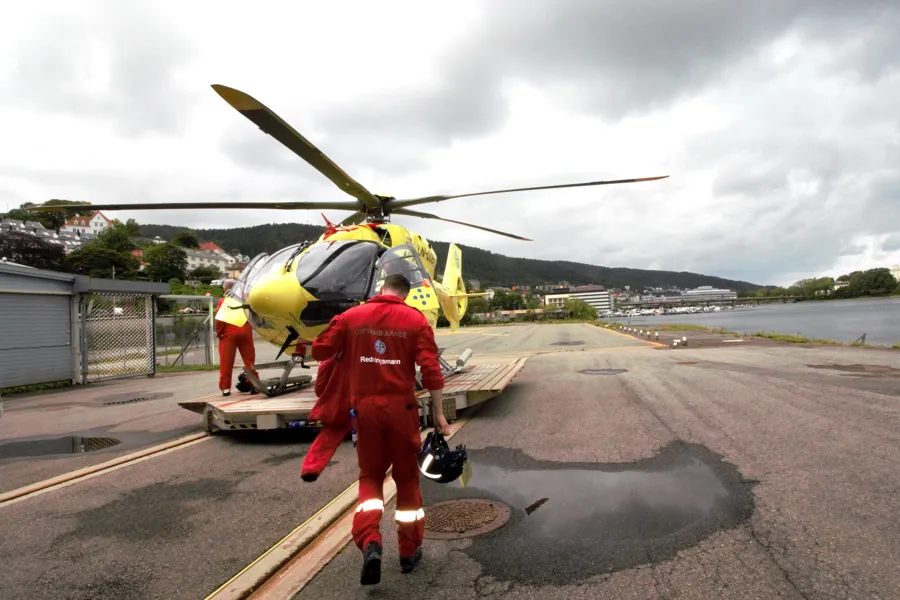
Together we are the Air Ambulance Service.
Here you can read more about how we collaborate for the benefit of the patient.
During two hectic weeks in May, over 60 rescue personnel in the air ambulance service had medical training days. One of them was Henrik Litland.
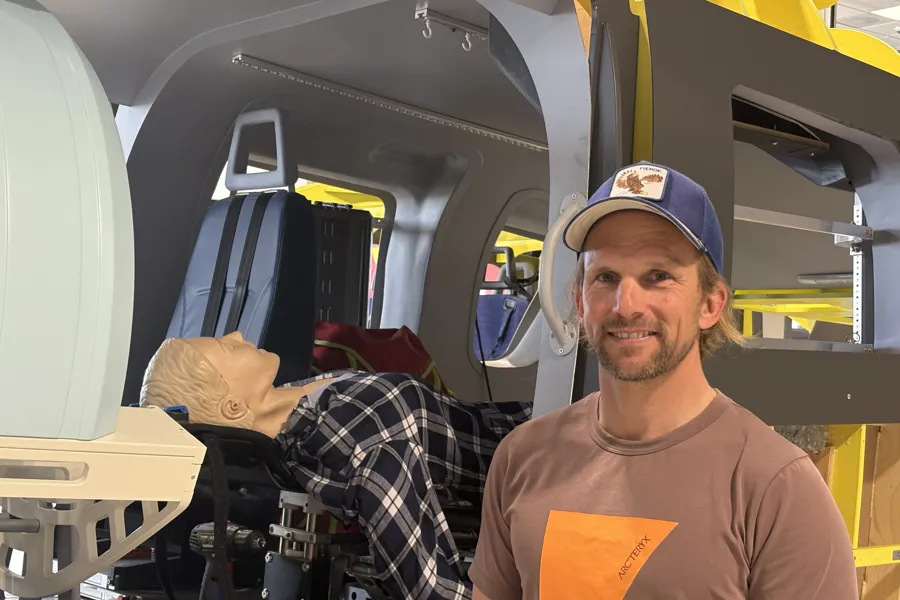
Photo: Elin Åsbakk Lind
A rescue man in the air ambulance service plays a central role both operationally and medically.
We participated in the training days that the Air Ambulance Service HF has stipulated in the agreement with the supplier Norsk Luftambulanse AS.
For many of the over 60 rescue men who were active during these days, the training was a repetition and reinforcement of topics they may not encounter every single day.
However, for others, the training days were part of the assessment to become a rescue man, and for Henrik Litland, the training days were among the last things he completed in his assessment as a rescue man.
- You really get the feeling of being at the sharp end for the benefit of the patient, says Litland.
Litland has spent nearly 8 years specifically working to become a rescue man and has a background in fire and rescue services as a smoke and rescue diver.
- As the years have gone by, my interest in medicine, particularly pre-hospital emergency medicine, has grown. Through previous collaborations with Norsk Luftambulanse AS, in my case as a rescue diver, I have seen the role of the rescue man as perhaps the perfect combination of rescue and emergency medicine, he says.

Photo: Elin Åsbakk Lind
Meeting other experienced rescue men was a pure bonus.
- The training is incredibly valuable in itself, and I also get to observe and learn from those with experience who are generous with good advice and tips based on their own experiences.
He also highlights the procedural training at Ullevål Hospital and incubator and neonatal medicine as the most educational for him.
- There is a low threshold for discussing and asking questions, and it feels like very job-relevant cases and lectures, he says, looking forward to starting his job as a rescue man this summer.
At Oslo University Hospital, section chief Halvard Stave was one of those leading the instruction of the rescue men during the training days.
- This is very important practical training. When we can gather all the rescue men in service for joint discussions and sharing experiences over several days, we calibrate our action patterns and eliminate unnecessary variation. Quality time that enhances quality, says Stave.